Why Does Netflix Have Different Libraries by Country? How Regional Viewing Works
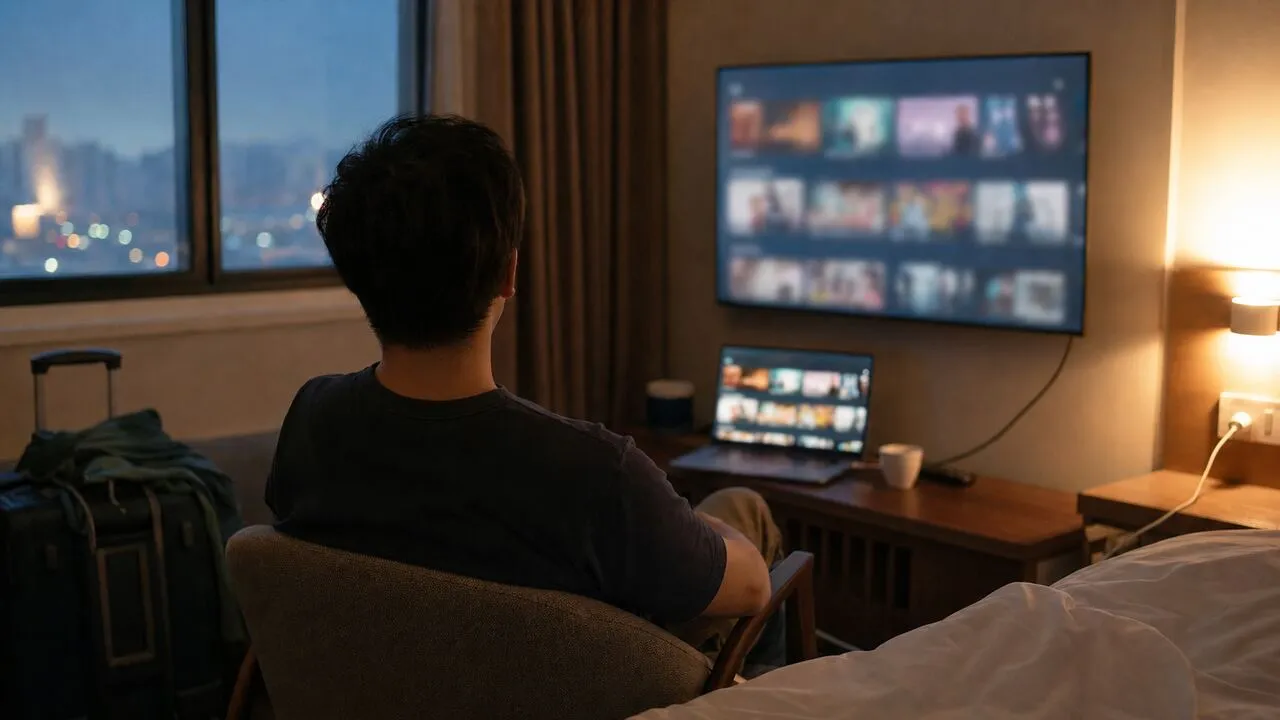
Netflix has different libraries by country mainly because rights to stream a movie or series are licensed market by market. Release windows, local regulation, dubbing and subtitle availability, and expected demand also shape each catalog. Traveling can therefore change the titles, downloads, audio tracks, and maturity ratings you see, even though you use the same account.
A VPN can change the apparent network location, but it does not rewrite licensing agreements or guarantee access to a chosen library. Netflix says VPN connections may be limited to titles for which it has worldwide rights, so the reliable approach is to understand how location affects the service and plan travel viewing accordingly.
A global service does not mean one global rights package
Netflix distributes its own productions and licenses work from studios, broadcasters, and independent rights holders. A film may be licensed to Netflix in Indonesia but already belong to a television network or another streaming service in Japan. A series can also have separate rights for streaming, downloads, dubbed audio, and different seasons.
These agreements have territories and time limits. When a license expires, a title may disappear from one market while remaining available elsewhere. When an exclusivity window ends, it may return. That is why a catalog comparison is only a snapshot, not a permanent promise.
Local release plans and audience demand change the mix
Licensing is the biggest reason, but not the only one. Services decide where to invest in a title based on expected viewing, acquisition cost, promotion plans, and the strength of local competition. A Korean drama may receive wider subtitle support across Southeast Asia, while a locally popular variety show may stay concentrated in its home market.
Release timing can differ too. A cinema, television, or home-video deal may delay streaming in one country. Another market may have no conflicting window and receive the same title earlier. Different dates do not necessarily indicate a technical error.
Regulation, ratings, audio, and subtitles create another layer
Countries use different content classifications and may impose different distribution requirements. A profile’s maturity settings can therefore expose a different set of titles after travel. Editing, classification, or age-verification requirements may also affect whether and how a work appears.
Language assets have their own rights and production schedules. Netflix may offer a title in two countries but provide different subtitle or dubbed-audio options. The visible “library” is not just a list of posters; it includes which version of each work can legally and practically be delivered in that location.
What actually changes when you travel
Netflix normally uses the country where you are currently connecting to determine the travel experience. According to its help guidance, the available shows and films, audio and subtitle choices, maturity ratings, My List entries, Continue Watching items, and even downloaded titles can differ outside your signup country.
Your viewing history and profile do not simply vanish. The confusing part is that a saved title may be unavailable in the destination market, or a download may refuse to play until you return to a country where that title is offered. Before a trip, keep a second offline entertainment option rather than assuming every download will travel.
This is distinct from the broader question of using regional streaming services abroad, where payment methods, account eligibility, and service-specific rules may matter in addition to licensing.
Why a VPN may show a smaller catalog instead of a larger one
A VPN encrypts traffic between your device and the VPN server and makes websites see the server’s public IP address. That is useful for privacy on shared networks, as explained in our guide to what a VPN does. It does not give an account new content rights.
Netflix states that when it detects VPN use, viewers may see only titles licensed worldwide. It also says VPN viewing is not supported for live events or on an ad-supported experience. Detection and availability can change, so “connect to country X and get its full library” is not a dependable promise. A wrong-location message can also be a troubleshooting signal: another VPN, antivirus feature, router setting, or network route may be affecting location detection.
If the goal is ordinary local viewing and Netflix identifies the wrong country, first check the network location, disable an unintended VPN or proxy, restart the app, and follow Netflix’s support steps. Do not keep switching servers and assume the account is broken.
A practical checklist before watching away from home
- Check the title in the destination catalog close to departure; availability can change.
- Confirm the required subtitle or audio track rather than assuming it follows the title.
- Treat downloads as region-dependent and bring a fallback for a long flight or train ride.
- Keep account recovery details and a backup payment method current.
- Use a VPN for network privacy where appropriate, especially on shared Wi-Fi, but not as a guarantee that another regional catalog will open.
- Follow the streaming service’s terms and the laws that apply where you are.
For the connection side of a trip, compare mobile data and privacy tools separately in our VPN, eSIM, and roaming guide.
The useful way to think about regional libraries
Netflix catalogs are regional because the underlying rights, release schedules, rules, language assets, and viewer demand are regional. Your account travels, but every title and download does not necessarily travel with it.
Plan around the catalog that is legitimately available where you are, verify important titles before leaving, and separate two questions: whether a show is licensed in that market and whether your current network connection is private. A VPN can help with the second question; it cannot guarantee the first.